


Emerging projects
Alongside projects focused on Tau protein and Alzheimer’s disease, our team addresses other issues related to neurodegenerative disorders by fostering the development of emerging research areas and leveraging our expertise in both basic and clinical neurobiology.
Personnel involved: Pauline Beauquel, David Blum, Valérie Buée-Scherrer, Baptiste Damary, Claire-Marie Dhaenens, Violette Delforge, Emilie Faivre, Nicolas Geoffre, Vincent Huin, Audrey Penin, Anaïs Poncet, Vasily Smirnov
Development of a new sporadic TDP-43 model.
![[Translate to English:] TDP43](/fileadmin/_processed_/e/b/csm_TDP43_cdce2a6951.png)
To date, there is no curative treatment for Amyotrophic Lateral Sclerosis (ALS) or frontotemporal lobar degeneration (FTLD)—rare, progressive neurodegenerative disorders that share common characteristics but have a complex and incompletely understood etiopathogenesis. Abnormal cytoplasmic accumulation or aggregation of the TDP-43 protein (transactive response DNA-binding protein 43) occurs in 97% of ALS patients and 45% of FTLD patients—primarily in neurons but also in glial cells—leading to the motor and cognitive symptoms observed in both conditions. However, most existing animal models of TDP-43-related pathologies are based on genetic mutations and therefore do not reflect the full spectrum of sporadic cases.
Our project aims to develop a new sporadic TDP-43 model to better understand the underlying pathophysiological mechanisms and to test two therapeutic approaches for ALS and FTLD that we are developing at the Lille Neuroscience & Cognition center: platelet-derived biomaterials and the selective blockade of A2A adenosine receptors (in collaboration with Anne-Sophie Rolland from the TREAT team).
Study of neurodegenerative disorders linked to the RFC1 gene.
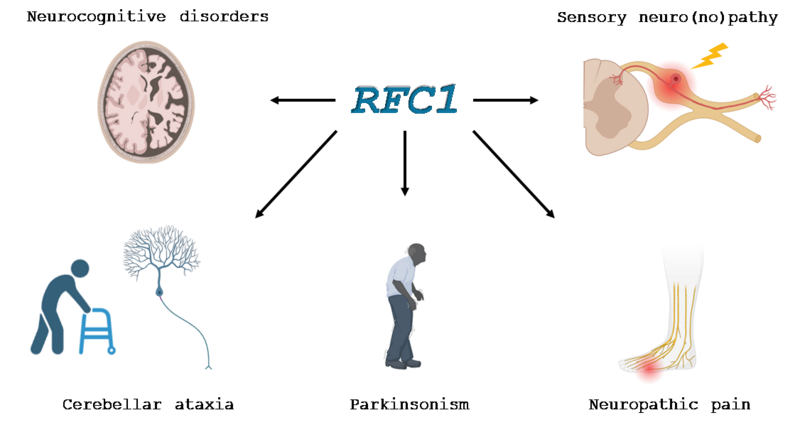
CANVAS (Cerebellar ataxia with neuropathy and vestibular areflexia syndrome) is a genetic disorder and a major cause of late-onset ataxia. The condition is caused by biallelic expansions located in intron 2 of the *RFC1* gene. This gene encodes a ubiquitous protein—replication factor C subunit 1—which is part of a protein complex involved in eukaryotic DNA replication and repair. The clinical presentation of the disease is highly heterogeneous. Indeed, the condition is characterized by complex neurological involvement affecting multiple components of the nervous system, including near-constant sensory neuropathy (causing proprioceptive ataxia), dysautonomia, cerebellar and vestibular dysfunction, motor neuron involvement, neuropathic pain, and chronic cough. Our team has also reported parkinsonism in 10% of CANVAS patients, as well as motor neuron involvement and frequent cognitive impairment.
We focus on the clinical, genetic, and pathophysiological aspects of RFC1-related disorders by (i) studying the disease's various endophenotypes (parkinsonism, cognitive impairment, pain, etc.), (ii) investigating the different mutations involved, and (iii) elucidating pathophysiological mechanisms by exploring the hypothesis of a loss of gene function. To this end, we are studying the effects of RFC1 gene knockdown in various cellular and animal models, with the aim of creating new disease models and initiating the development of novel therapeutic strategies—not only for these RFC1-related disorders but also for other neurological conditions presenting with similar clinical features.
Degenerative retinal diseases.
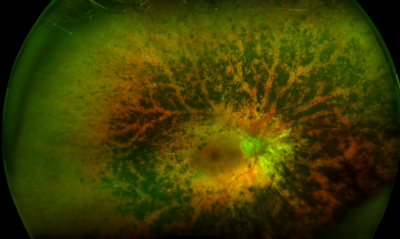
We focus on degenerative retinal diseases, particularly the discovery of new genes involved in rare forms of cone photoreceptor dystrophies and dysfunctions, as well as their phenotypic and genotypic characterization. We investigate the cellular consequences of variants to identify markers that could be useful for diagnosis, prognosis, and treatment. We also conduct extensive functional validation tests for genetic defects associated with inherited retinal dystrophies (using minigenes and transcriptomics).
Finally, we are developing innovative technologies (long-read sequencing) to study genes with complex structures located on the X chromosome, and specifically to understand the effect of *RPGR* ORF15 methylation on disease expression in women, as well as the organization of the *OPN1LW* and *OPN1MW* genes—which encode cone opsins—a major cause of color vision abnormalities.
This theme focuses on clinical impact and the personalization of diagnoses, featuring numerous genotype-phenotype correlation studies.