


New metabolic functions of the Tau protein
Personnel involved: David Blum, Luc Buée, Sabiha Eddarkaoui, Emilie Faivre, Dimitri Kwiatkowski
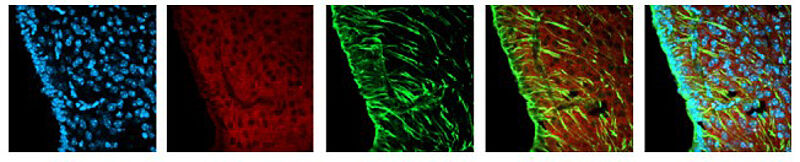
The accumulation of abnormally phosphorylated, misfolded, and aggregated Tau protein is a central event in Alzheimer’s disease and primary tauopathies. Tau is far more than merely a microtubule-associated protein; extensive work by our team has highlighted its various non-microtubule-related functions in the regulation of diverse cellular and physiological processes. This is pathologically significant, as Tau misfolding can impair its physiological function. Notably, we have identified novel functions of Tau linked to DNA integrity and repair, RNA metabolism, the cell cycle, and transcription.
In a completely different context, we have demonstrated that the Tau protein controls peripheral metabolism—specifically glucose homeostasis—through both central and peripheral mechanisms; the latter rely on Tau’s ability to regulate insulin signaling in the brain as well as to control the hormone's secretion by pancreatic β-cells.